
Archival research
Collated and edited by Ross Woods, 2026
Contents
1. Working with Primary Sources2. Archives as Institutions
3. Reading Against the Grain
4. Fragmentary Evidence and Absence
5. Ethics of Archival Research
6. The Politics of the Archive
7. Recovery Research
8. Filling the Gaps
1
Working with Primary Sources
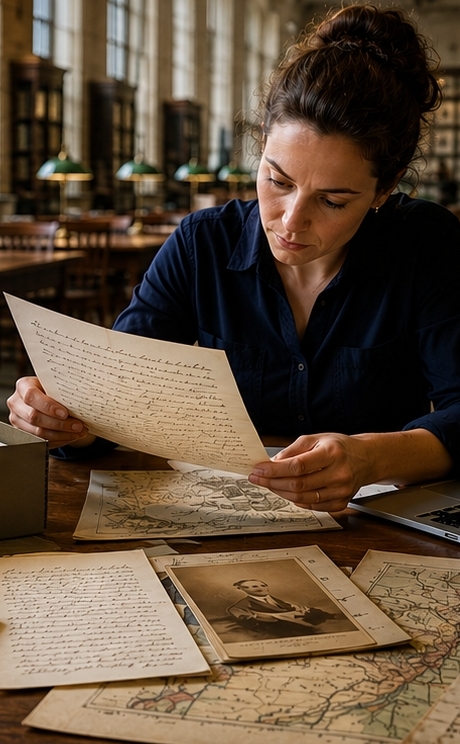
Historical research depends fundamentally on engagement with primary sources. Primary sources are materials produced within the period or context being studied, such as letters, diaries, official records, photographs, artifacts, sermons, field notes, or administrative documents. They are valued because they provide direct access to past worlds rather than retrospective interpretation alone. At the same time, primary sources require careful, critical handling, especially in light of archival silence and uneven preservation.
Working with primary sources involves recognizing that these materials are not neutral windows onto the past. They are products of specific historical actors operating within particular social, political, and institutional constraints. Decisions about what was recorded, how it was recorded, and what was preserved were shaped by power, literacy, access to materials, and prevailing norms of documentation. As a result, primary sources often reflect the perspectives of elites, institutions, or dominant groups more clearly than those of marginalized populations.
Historians must therefore attend closely to the conditions of production of primary sources. This includes asking who created the source, for what purpose, and under what circumstances. A government report, for example, differs fundamentally from a personal diary in its intended audience, degree of self-censorship, and relationship to authority. Even seemingly private sources may be shaped by anticipation of later readers, legal risk, or moral judgment. Treating primary sources as situated artifacts rather than transparent evidence strengthens historical interpretation.
Archival context is equally significant. Archives are not neutral repositories but curated collections shaped by institutional priorities, resource limitations, and historical contingencies. What survives in an archive often reflects decisions about value, relevance, and legitimacy made long before the contemporary researcher arrives. Working with primary sources therefore requires attention not only to the document itself but also to the archive that preserves it, including what is absent, fragmented, or deliberately excluded.
Primary sources must also be read relationally rather than in isolation. Cross-referencing materials, comparing genres, and situating documents within broader social patterns help mitigate the risks of overinterpretation. Silence, contradiction, and inconsistency across sources are not methodological failures but valuable evidence of historical complexity. Such tensions often reveal conflicts of interest, unequal power relations, or contested meanings within the past.
In the context of archival silence, working with primary sources demands both rigor and humility. Researchers must balance careful textual analysis with an awareness of what cannot be fully recovered. This involves resisting the temptation to treat surviving documents as comprehensive accounts and instead acknowledging their partiality. By combining close reading with contextual analysis and methodological reflexivity, historians can use primary sources responsibly while remaining attentive to the voices and experiences that remain unrecorded.
Guiding Analytical Questions for Primary-Source Analysis
When working with primary sources, researchers should approach documents with a structured set of analytical questions that foreground context, power, and silence. These questions are not meant to be exhaustive or prescriptive, but to support careful, reflexive engagement with historical materials.
- Who created this source, and what was their social position, institutional role, and relationship to power at the time of its production? How might these factors have shaped what was recorded and how it was framed?
- For what purpose was the source created, and for which intended audience? How do purpose and audience influence tone, genre, and claims to authority within the document?
- What assumptions, values, or categories does the source take for granted? Which aspects of social life are presented as normal, problematic, or invisible?
- What constraints—political, institutional, economic, or cultural—may have limited what could be written or preserved? Are there signs of self-censorship, omission, or strategic emphasis?
- What silences are present in the source? Whose voices, experiences, or perspectives are absent, and what historical conditions might explain those absences?
- How does this source relate to other contemporary sources? Where do accounts converge, diverge, or contradict one another, and what might those tensions reveal?
- How has the source been preserved, archived, or mediated over time? What role has the archive itself played in shaping access to this material and its interpretation?
- How should this source be used responsibly in historical interpretation? What claims can it reasonably support, and where should uncertainty, partiality, or ethical caution be explicitly acknowledged?
2
Archives as Institutions
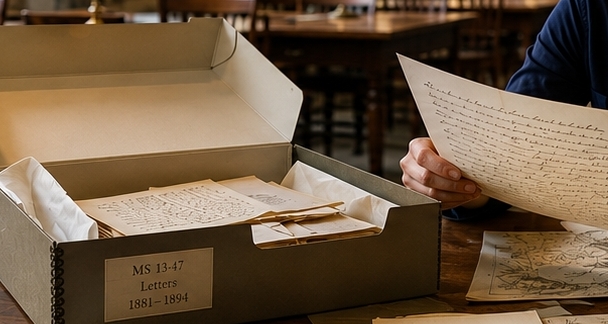
In historical research, archives are often treated as neutral repositories that simply store the remnants of the past. However, archives are themselves institutions, shaped by social values, political power, professional norms, and material constraints. Understanding archives as institutions is essential for analyzing both what is preserved and what is absent, particularly in the study of archival silence.
Archives are created, maintained, and governed by specific organizations, such as states, religious bodies, universities, museums, or private foundations. These institutions establish criteria for collection, classification, access, and preservation. Decisions about what is worthy of archiving are influenced by institutional missions, available resources, and prevailing historical priorities. As a result, archives tend to privilege certain kinds of documents, authors, and experiences while excluding others.
Institutional power plays a central role in shaping archival holdings. Groups with political authority, economic resources, or cultural legitimacy are more likely to generate records and to have those records preserved. Conversely, marginalized communities often leave fewer archival traces, not because they lacked history or agency, but because their lives were less likely to be documented or valued by archival institutions. Archival silence is therefore not merely a consequence of loss or decay, but frequently the outcome of structured inequality.
The organization of archives also reflects institutional assumptions about knowledge. Classification systems, finding aids, and descriptive practices shape how materials are discovered and interpreted. The language used to label collections can reinforce dominant narratives while obscuring alternative perspectives. Researchers must therefore attend not only to documents themselves but also to the archival frameworks that mediate access to them.
Access policies further reveal the institutional character of archives. Restrictions based on privacy, legal status, or institutional authority can limit who is able to consult certain materials and under what conditions. Even when access is formally open, practical barriers such as geography, cost, and technical expertise can shape whose histories are most readily researched.
Viewing archives as institutions encourages a more critical and reflexive approach to historical research. It prompts scholars to ask how archival practices shape historical knowledge and how absence, fragmentation, and silence are produced. By situating archives within broader structures of power and governance, researchers can better interpret both the presence and the absence of evidence in the historical record.
Guiding Analytical Questions: Archives as Institutions
When treating archives as institutions rather than neutral repositories, researchers must extend their analytical focus beyond individual documents to the structures, practices, and power relations that shape archival collections. The following guiding questions are intended to support critical engagement with archives within historical research, particularly in relation to archival silence.
- What institution created, maintains, or governs this archive, and what is its historical mission, mandate, or purpose? How might this institutional identity shape what is collected, preserved, or excluded?
- Who had the authority to produce records that entered this archive, and who did not? Which social groups, professions, or communities are most visible in the holdings, and which are underrepresented or absent?
- What criteria have guided appraisal, selection, and preservation decisions over time? How have changing institutional priorities, political regimes, or resource constraints altered the archive’s composition?
- How are materials organized, classified, and described within the archive? What assumptions about knowledge, relevance, or legitimacy are embedded in cataloging systems, finding aids, or descriptive language?
- What access restrictions govern this archive? Who is permitted to consult materials, under what conditions, and with what limitations? How do legal, ethical, or practical barriers shape historical research outcomes?
- What forms of archival silence are evident? Are absences the result of deliberate exclusion, routine administrative practice, loss, or the historical marginalization of certain populations?
- How does this archive relate to other archives or sources? What perspectives become visible only through comparative or cross-archival research?
- Finally, how should the institutional character of the archive shape the researcher’s interpretation and ethical responsibility? What claims can be made with confidence, and where must uncertainty, partiality, or silence be explicitly acknowledged?
3
Reading Against the Grain
“Reading against the grain” is a methodological approach in historical research that involves interpreting sources in ways that go beyond, or even resist, their surface meanings and stated intentions. Rather than accepting documents at face value, this approach treats them as products of power-laden contexts and asks what they reveal unintentionally about social relations, exclusions, and conflicts. It is particularly valuable in situations marked by archival silence, where marginalized voices are underrepresented or absent from the record.
At its core, reading against the grain shifts analytical attention from what documents claim to say to what they inadvertently disclose. Official records, administrative reports, and elite correspondence are often written to assert control, legitimacy, or coherence. When read critically, however, these same texts can expose anxieties, contradictions, resistance, and failures of authority. Details that appear incidental—word choices, omissions, repetitions, or defensive justifications—may offer insight into contested social realities.
This approach is especially important when working with sources produced by dominant institutions such as states, churches, colonial administrations, or scientific bodies. Such documents often silence or distort the experiences of subordinated groups. Reading against the grain allows historians to use these sources without reproducing their assumptions, by attending to traces of marginalized lives embedded indirectly in the text. For example, legal records may reveal everyday practices of ordinary people through accusations and punishments, even when those individuals never speak in their own voices.
Reading against the grain does not involve speculative interpretation detached from evidence. Rather, it requires disciplined attention to context, genre, and power relations. Historians must remain grounded in what the document can reasonably support, while being explicit about uncertainty and inference. This method complements, rather than replaces, close reading and corroboration with other sources.
Within the broader framework of historical research and archival silence, reading against the grain enables scholars to work creatively and ethically with imperfect records. It acknowledges the limits of the archive while refusing to treat those limits as absolute barriers to understanding. By interrogating dominant sources critically, historians can reconstruct aspects of the past that were never intended to be preserved, while remaining transparent about the partial and contested nature of their interpretations.
Guiding Analytical Questions: Reading Against the Grain
Reading against the grain requires a deliberate shift in analytical stance, prompting researchers to interrogate sources beyond their explicit claims and stated purposes. The following guiding questions are intended to support careful, disciplined use of this method within historical research, particularly when working with dominant or institutionally produced sources.
- What explicit purpose does the document claim for itself, and what interests or forms of authority does it seek to advance or protect? How might these aims shape what is emphasized or minimized?
- What assumptions about social order, morality, normality, or legitimacy are taken for granted in the text? How do these assumptions reflect the position of the author or institution within existing power structures?
- What tensions, contradictions, or anxieties appear within the document? Are there moments where the text becomes defensive, repetitive, unusually detailed, or evasive, and what might these features reveal unintentionally?
- Which people or groups appear only indirectly, such as through regulation, accusation, classification, or surveillance? What can be inferred—carefully and cautiously—about their lives or actions from these traces?
- What is absent or silenced in the document, and how might these absences be linked to relations of power rather than to historical insignificance?
- How does the genre of the document shape what can be said and how it is said? What alternative readings emerge when genre conventions are questioned rather than accepted?
- What limits should be placed on inference when reading against the grain? Where must the researcher acknowledge uncertainty, speculation, or the risk of overinterpretation?
- How does reading against the grain change the kinds of historical questions that can be asked of this source, and how might it be combined responsibly with other sources or methods?
Case-Study Vignette: Reading Against the Grain in Colonial Records
This case study illustrates the practice of reading against the grain through the analysis of late nineteenth-century colonial court records and missionary reports from a coastal settlement under imperial administration. The surviving documents were produced by colonial officials and missionaries tasked with maintaining order, enforcing law, and documenting religious conversion. On the surface, these records present themselves as orderly, factual accounts of governance and moral progress.
Colonial court transcripts record a series of minor offenses, such as vagrancy, failure to pay taxes, or violations of labor regulations. The accused individuals appear only briefly, identified by name, age, and alleged offense, while the voices of judges and administrators dominate the text. Read at face value, the records portray local populations as disorderly and in need of discipline. When read against the grain, however, the frequency and repetition of these offenses suggest patterns of everyday resistance to imposed labor systems and taxation regimes. The court’s insistence on recording compliance failures inadvertently reveals the fragility of colonial authority.
Missionary reports from the same period describe conversion efforts in optimistic terms, emphasizing numerical growth and moral improvement. Yet careful attention to language reveals moments of frustration, repetition, and defensiveness. References to “backsliding,” “superficial understanding,” or “persistent traditional practices” point to the limits of missionary influence. Although local converts rarely speak in their own voices, these textual traces suggest selective adoption, negotiation, and reinterpretation of Christian teachings rather than simple acceptance.
By reading these documents against their stated intentions, historians can reconstruct aspects of local agency that were never meant to be preserved. The records do not offer direct testimony from colonized individuals, but they reveal resistance, negotiation, and cultural persistence through the very mechanisms designed to control and reform them. This vignette demonstrates how dominant sources, when read critically and contextually, can yield insight into marginalized lives while still requiring careful acknowledgment of inference and limitation.
Case-Study Vignette: Reading Against the Grain in Census and Asylum Records
This vignette demonstrates the practice of reading against the grain through the analysis of late nineteenth- and early twentieth-century population censuses and asylum admission records. These sources were produced by state and medical institutions to classify, manage, and regulate populations. On the surface, they present themselves as objective instruments of enumeration and diagnosis, offering orderly tables, standardized categories, and administrative summaries.
Colonial and national censuses recorded individuals according to categories such as race, occupation, marital status, and household structure. These categories were defined by state priorities rather than by local self-understanding. When read at face value, census data appears to offer neutral demographic facts. Read against the grain, however, irregular entries, crossed-out categories, and inconsistent classifications reveal tensions between lived social realities and imposed bureaucratic order. For example, repeated reclassification of individuals’ racial or occupational status across successive censuses suggests the instability of official categories and the persistence of local identities that resisted easy classification.
Asylum records similarly aimed to impose diagnostic clarity on complex human experiences. Admission forms typically reduced individuals to brief descriptions of symptoms, behavior, and presumed causes of mental illness, often written by physicians or officials rather than by patients themselves. Patients’ voices appear only indirectly, filtered through medical language and institutional judgment. When read against the grain, the emphasis on nonconformity, disobedience, or emotional excess points to social norms governing gender, labor, and morality. Patterns in admissions—such as the overrepresentation of women labeled as hysterical or migrants described as unstable—reveal how social marginalization was medicalized.
By attending to classification practices, repetition, and silence within these records, historians can recover traces of agency and constraint that the documents were never intended to preserve. Census and asylum records thus become sources not only for population data or institutional history, but for understanding how states defined normality, managed difference, and rendered certain lives legible while obscuring others. This vignette illustrates how reading against the grain allows dominant bureaucratic sources to be used critically, while remaining attentive to inference, limitation, and ethical responsibility.
4
Fragmentary Evidence and Absence
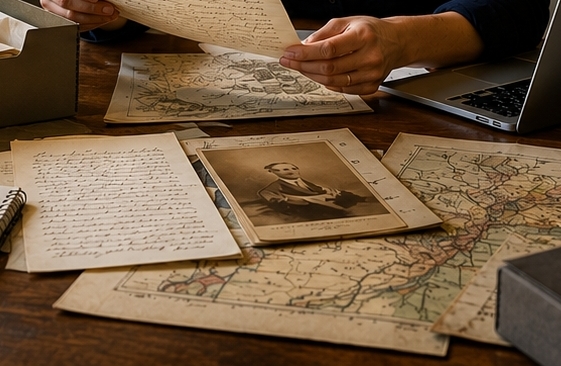
Historical research frequently proceeds on the basis of fragmentary evidence. Surviving documents are often incomplete, damaged, selectively preserved, or disconnected from the contexts in which they were produced. Rather than representing a failure of historical method, fragmentation and absence are defining conditions of archival research. Understanding how to work responsibly with partial evidence is therefore central to the study of history, particularly in relation to archival silence.
Fragmentary evidence arises from many causes. Documents may be lost through neglect, destruction, or disaster. Others may never have been created because certain events, experiences, or lives were not considered worthy of record. Institutional practices of appraisal and preservation further shape what survives, often privileging official, written, or elite forms of documentation. As a result, the historical record is uneven, with dense documentation in some areas and profound silence in others.
Absence itself must be treated as analytically meaningful. What is missing from the archive can reveal as much about historical power relations as what is present. The absence of testimony from enslaved people, women, colonized populations, or the poor does not indicate their historical insignificance, but rather reflects the social and institutional barriers that limited their ability to produce or preserve records. Interpreting absence requires attention to the conditions under which records were created, valued, and retained.
Working with fragmentary evidence demands methodological caution. Historians must resist the temptation to overgeneralize from isolated documents or to treat surviving sources as representative of broader realities. At the same time, fragments can be highly informative when read carefully and contextually. A single letter, ledger entry, or marginal note may illuminate social practices, relationships, or conflicts otherwise undocumented, especially when placed in relation to other sources.
Approaches such as comparative analysis, reading against the grain, and triangulation across different types of evidence are particularly valuable in addressing fragmentation and absence. These methods do not eliminate silence, but they help clarify its contours and implications. Equally important is scholarly transparency. Researchers should explicitly acknowledge gaps, uncertainty, and limits of inference, rather than masking absence with unwarranted narrative coherence.
Within historical research and archival silence, fragmentary evidence should be understood not as a problem to be solved, but as a condition to be interpreted. By treating absence as historically produced and analytically significant, historians can develop interpretations that are both more critical and more ethically responsible, recognizing the limits of what can be known while remaining attentive to the lives that exceed the archive.
Case-Study Vignette: Fragmentary Evidence in Parish and Prison Records
This vignette illustrates the challenges and interpretive possibilities of working with fragmentary evidence through a set of nineteenth-century parish registers and prison intake logs from a regional archive. The surviving records are incomplete: baptismal registers contain long gaps, marginal notes replace full entries, and prison logs list names and offenses without accompanying testimony or narrative context. Together, these fragments form the primary documentary trace of local working-class life.
Parish records were intended to document sacramental participation rather than everyday existence. Many entries record only a name, a date, and the officiating cleric, offering little insight into family structure, economic conditions, or personal belief. In several years, entire registers are missing, likely due to relocation, neglect, or deterioration. The absence of records during periods of famine and labor unrest raises questions about whose lives were disrupted and why documentation failed at precisely these moments.
Prison intake logs provide another fragmentary perspective. Individuals appear suddenly in the archive at moments of arrest, reduced to brief descriptors such as age, occupation, and offense. No further record remains of their lives before or after incarceration. Read in isolation, these entries risk portraying marginal individuals as defined solely by criminality. When read alongside parish fragments, however, patterns begin to emerge, such as repeated surnames, seasonal spikes in arrests, or correlations between missing parish data and increased incarceration.
This vignette demonstrates how fragmentary evidence constrains historical certainty while still enabling careful interpretation. The archive does not permit a full reconstruction of individual lives, yet the gaps themselves point to structural vulnerability, institutional priorities, and moments of social stress. By resisting narrative closure and acknowledging absence, historians can use fragments to illuminate historical conditions without overstating what the evidence can support.
Guiding Analytical Questions: Fragmentary Evidence and Absence
Working with fragmentary evidence requires historians to balance careful interpretation with explicit acknowledgment of uncertainty and absence. The following guiding analytical questions are intended to support responsible engagement with incomplete, damaged, or uneven historical records, particularly in contexts marked by archival silence.
- What survives of the historical record in this case, and in what condition? What kinds of documents, materials, or traces are available, and what is their scope and limitation?
- What has been lost, destroyed, or never recorded? How might historical events, institutional practices, or social inequalities have contributed to this fragmentation or absence?
- Whose voices, experiences, or perspectives are most visible in the surviving fragments, and whose are missing or only indirectly present? What patterns of power or exclusion do these absences suggest?
- How representative are the surviving sources of broader historical realities? What risks arise if these fragments are treated as typical rather than exceptional?
- What contextual knowledge is necessary to interpret fragmentary evidence responsibly? How can social, political, economic, or cultural context help clarify what fragments can and cannot support?
- How can different types of sources be brought into relation with one another to illuminate gaps or silences? What forms of triangulation or comparison are possible given the available evidence?
- Where must interpretation remain tentative? How can uncertainty, ambiguity, and speculation be acknowledged transparently rather than resolved prematurely?
- How does attention to fragmentary evidence and absence shape the ethical responsibilities of the historian? How can interpretation avoid erasing marginalized lives while still respecting the limits of the archive?
Case-Study Vignette: Fragmentary Evidence in Ship Logs and Hospital Records
This vignette illustrates the challenges of working with fragmentary evidence through the combined use of nineteenth-century ship logs and early twentieth-century hospital admission records. Both sources were produced for administrative purposes rather than for documenting individual lives, and both survive in partial, uneven form. Together, they demonstrate how historians must navigate absence, discontinuity, and institutional bias in reconstructing the past.
Ship logs from a transatlantic trading vessel record weather conditions, cargo, crew discipline, and notable incidents at sea. Entries are brief and formulaic, often limited to a few lines per day. Crew members appear only when illness, injury, punishment, or death interrupts routine operations. Several months of logs are missing entirely, likely lost through damage or disposal. When sailors do appear in the surviving entries, they are identified by rank or surname, with little indication of origin, family ties, or life beyond the ship.
Hospital admission registers from a nearby port city provide another fragmentary glimpse into these lives. Patients are listed with age, occupation, diagnosis, and outcome, but rarely with personal testimony. Sailors appear sporadically in these records, often following ship arrivals, suffering from injuries, infectious disease, or exhaustion. The language of diagnosis reflects contemporary medical assumptions, reducing complex experiences of labor, migration, and poverty to standardized clinical categories.
Read together, these sources do not allow for full biographical reconstruction. Yet patterns emerge through careful comparison. Clusters of hospital admissions following long voyages suggest the physical toll of maritime labor, while repeated appearances of certain surnames hint at cycles of injury and return to service. The absence of sailors’ own voices highlights how mobile and precarious populations were documented only when they became administratively visible.
This vignette demonstrates how fragmentary evidence can be used responsibly without forcing narrative completeness. Ship logs and hospital records reveal institutional priorities—navigation, discipline, diagnosis—while obscuring personal experience. By attending to both what is present and what is absent, historians can illuminate structural conditions of labor and vulnerability while remaining transparent about the limits imposed by the archive.
Discussion Questions
- What institutional purposes shaped the production of ship logs and hospital admission records, and how do these purposes influence what is recorded and what is omitted?
- Whose lives become visible in these sources, and only under what conditions? What does this suggest about power, mobility, and vulnerability in the historical context?
- How do missing entries, gaps in chronology, or standardized language function as forms of evidence rather than merely as obstacles to interpretation?
- What kinds of historical claims can be responsibly made on the basis of these fragmentary records, and where must interpretation remain tentative?
- How might additional sources—such as letters, port records, newspapers, or oral histories—complement or challenge the picture suggested by these fragments?
5
Ethics of Archival Research

Ethical considerations are central to archival research, particularly when working with sources marked by power asymmetries, silence, and fragmentary survival. Archives contain records of real people whose lives were shaped by inequality, coercion, violence, and vulnerability. Ethical archival research therefore requires more than technical competence; it demands reflexivity, care, and accountability in how historical materials are interpreted, represented, and disseminated.
One ethical concern involves representation. Because archives disproportionately preserve the voices of institutions and elites, historians risk reproducing the perspectives and assumptions of those in power. Ethical research requires awareness of whose voices are amplified and whose are marginalized or absent. When working with sources that speak about, rather than for, vulnerable populations, researchers must avoid presenting institutional descriptions as transparent accounts of lived experience. This includes resisting language that naturalizes domination, pathologizes difference, or renders suffering invisible.
Privacy and harm are also key ethical issues. Archival records often contain sensitive information about individuals, including medical diagnoses, criminal accusations, religious affiliation, or family relationships. Even when such records are legally accessible, their use may raise moral questions about consent, exposure, and potential harm to descendants or communities. Ethical researchers must consider not only what can be used, but what should be used, and how findings should be framed to minimize harm while preserving historical integrity.
Interpretive responsibility is another ethical dimension. Working with fragmentary evidence and silence requires restraint. Filling gaps with speculation, imposing coherence where none exists, or projecting contemporary values onto historical actors can misrepresent the past. Ethical interpretation involves acknowledging uncertainty, clearly distinguishing evidence from inference, and making the limits of knowledge visible rather than obscured by narrative confidence.
Ethics also extend to the researcher’s positionality. Scholars bring their own social locations, values, and institutional affiliations into the archive. Reflexive awareness of how these factors shape research questions, interpretive choices, and authority claims is essential. This is particularly important when researching communities to which the historian does not belong, or when working across lines of race, class, religion, gender, or colonial history.
Finally, ethical archival research involves responsibility toward audiences. Historians shape public understanding of the past through teaching, writing, and curation. Presenting archival findings with care, contextualization, and humility helps prevent misuse or oversimplification of historical evidence. In the context of archival silence, ethical practice does not seek to overcome absence at all costs, but to honor both what can be known and what remains irretrievably lost.
Taken together, these considerations underscore that ethics are not an external constraint on archival research but an integral part of historical method. By approaching archives with ethical attentiveness, historians can produce scholarship that is both analytically rigorous and morally responsible.
Guiding Ethical Reflection Questions
Ethical reflection is an essential component of archival research, particularly when working with sources shaped by power, inequality, and silence. The following questions are intended to support classroom discussion and research practice by encouraging thoughtful consideration of responsibility, harm, and interpretive care.
- Whose lives and experiences are represented in the archival materials being used, and whose are spoken about only indirectly or not at all? How might research choices amplify or further marginalize certain voices?
- What forms of power shaped the creation, preservation, and accessibility of these records? How does engaging with these sources risk reproducing the assumptions or harms embedded in their original contexts?
- What ethical obligations arise when working with sensitive materials, such as medical records, legal documents, or personal correspondence? How should issues of privacy, consent, and potential harm to individuals or communities be weighed against scholarly value?
- How should uncertainty, absence, and fragmentary evidence be communicated to audiences? What ethical risks emerge when historians smooth over gaps or present partial evidence with unwarranted confidence?
- In what ways does the researcher’s own positionality—social, cultural, institutional, or disciplinary—influence interpretive authority? How can reflexivity be practiced without displacing attention from the historical subjects themselves?
- How might research findings be received or used beyond academic contexts? What responsibility does the researcher bear for preventing misinterpretation, misuse, or instrumentalization of archival evidence?
- What does it mean to conduct archival research with humility? How can historians acknowledge the limits of the archive while still honoring the lives and experiences that exceed the documentary record?
Ethical Dilemma Vignette: Using Sensitive Archival Records
A historian is conducting research in a regional archive on early twentieth-century public health responses to tuberculosis. Among the available materials are hospital admission registers and patient case files containing names, ages, diagnoses, family circumstances, and notes on behavior. Although the archive permits access to these records under current regulations, many files include intimate details about individuals who were poor, socially marginalized, and unable to consent to future use of their information.
While reviewing the records, the historian notices recurring patterns of institutional neglect and moral judgment, particularly toward migrant workers and unmarried women. Including these details would strengthen the analytical argument about how public health policies intersected with class and gender norms. However, doing so would also risk exposing identifiable personal histories and framing individuals primarily through the stigmatizing language of the institution that recorded them.
The historian faces a dilemma. Omitting names and details may reduce potential harm but could also flatten the historical reality and obscure the human cost of policy decisions. Quoting directly from the records may preserve historical specificity but risks reproducing invasive surveillance and institutional bias. The archive offers no explicit guidance beyond legal access, leaving ethical judgment to the researcher.
This vignette invites discussion about how historians should balance evidentiary rigor with care for the subjects of archival records. It raises questions about consent, representation, harm, and responsibility, particularly when working with sources created through unequal power relations. The dilemma has no single correct resolution, but it highlights the ethical reasoning required when interpreting and presenting archival evidence.
6
The Politics of the Archive
Archives are not politically neutral spaces. They are shaped by decisions about power, authority, legitimacy, and memory, all of which determine whose histories are preserved and whose are marginalized or erased. The politics of the archive refers to the ways archival practices reflect and reinforce social, political, and ideological interests, both at the time records are created and in the processes through which they are preserved, organized, and accessed.
At the most basic level, archives are political because they are produced within systems of governance and control. States, religious institutions, colonial administrations, and corporations generate records in order to manage populations, assert authority, and document compliance. The resulting archives often privilege official perspectives and institutional priorities, presenting them as authoritative accounts of the past. This means that archival collections frequently record acts of regulation, surveillance, and discipline more thoroughly than everyday life or resistance.
Political dynamics also shape what is considered worthy of preservation. Decisions about appraisal and retention reflect judgments about historical value that are influenced by contemporary priorities and power relations. Records associated with elites, formal institutions, and written culture are more likely to be preserved than those associated with oral traditions, informal practices, or marginalized communities. As a result, the archive often mirrors existing social hierarchies, transforming inequality into historical silence.
The organization and description of archival materials further reflect political assumptions. Classification systems, catalog descriptions, and metadata embed particular narratives about identity, normality, and relevance. Terminology used to describe groups or events may reproduce colonial, racial, or gendered frameworks, shaping how researchers encounter and interpret materials. In this way, the politics of the archive operate not only through what is collected, but through how collections are structured and made intelligible.
Access is another key political dimension. Legal restrictions, institutional gatekeeping, and material barriers such as location and cost determine who can engage with archival materials. Even when archives are formally open, unequal access can shape whose histories are researched and whose interpretations gain authority. The politics of access thus influence both knowledge production and public memory.
Recognizing the politics of the archive does not require rejecting archival sources. Rather, it calls for critical engagement that situates archives within the power relations that produced them. For historians and scholars in the humanities, this perspective encourages reflexivity, attention to silence, and ethical responsibility. By treating archives as contested sites of memory rather than neutral repositories, researchers can better understand how history is constructed, constrained, and continually renegotiated.
Guiding Analytical Questions: The Politics of the Archive
Engaging the politics of the archive requires researchers to examine how power, ideology, and institutional interests shape what is preserved, how it is organized, and how it is accessed. The following guiding analytical questions are intended to support critical reflection on archival politics in both classroom discussion and research practice.
- What political, religious, colonial, or institutional forces shaped the creation and maintenance of this archive? How do these forces influence the kinds of records that were produced and preserved?
- Whose interests are most clearly represented in the archival collections, and whose histories appear marginal, distorted, or absent? What does this distribution reveal about historical power relations?
- How do archival classification systems, descriptive language, and metadata frame identities, events, or social groups? In what ways might these frameworks reproduce dominant narratives or obscure alternative interpretations?
- What decisions about appraisal, retention, or destruction have shaped this archive over time? How might historical moments of transition, conflict, or reform have altered what survives?
- Who has access to this archive, and under what conditions? How do legal restrictions, institutional gatekeeping, or material barriers shape who can produce historical knowledge from these materials?
- How might the archive function as a tool of governance, surveillance, or control rather than merely as a repository of memory? What evidence of these functions appears in the records themselves?
- In what ways can researchers challenge or complicate the politics of the archive through methodological choices, such as reading against the grain, cross-archival comparison, or collaboration with affected communities?
- Finally, how should awareness of archival politics shape the claims historians make and the authority they assert? What responsibilities arise when working with archives that embody unequal power relations?
Case-Study Vignette: Archival Politics in a Colonial Administration Archive
This vignette illustrates the politics of the archive through a colonial administration archive assembled during the early twentieth century and now housed in a national repository. The archive contains correspondence, land surveys, census reports, and administrative memoranda produced by colonial officials governing an Indigenous population. At first glance, the collection appears comprehensive, offering detailed documentation of governance, development, and social conditions.
Closer examination reveals that the archive overwhelmingly reflects the perspectives and priorities of colonial authorities. Records meticulously document taxation, land appropriation, labor regulation, and population classification, while Indigenous voices appear primarily as objects of policy rather than as historical agents. Petitions, oral testimony, and local knowledge systems are largely absent, having been deemed unofficial, unreliable, or administratively irrelevant at the time of collection.
The politics of archival selection become especially visible when researchers discover references to confiscated Indigenous documents and oral statements summarized or translated by colonial officials. Original materials were often destroyed, removed, or never accessioned into the archive, replaced instead by bureaucratic abstractions. As a result, Indigenous resistance, negotiation, and everyday life are visible only indirectly, filtered through the language of control and surveillance.
Decades later, the archive becomes central to legal and historical debates over land rights and sovereignty. Government representatives cite the archival record as authoritative evidence of lawful administration, while Indigenous communities challenge the archive’s completeness and legitimacy. The archive’s political origins now shape contemporary struggles over recognition, restitution, and historical truth.
This vignette demonstrates that archival politics are not confined to the past. Decisions about what was preserved, how it was described, and whose voices were excluded continue to have material consequences. Treating the archive as a contested political site rather than a neutral repository enables researchers to understand how power operates through preservation, silence, and authority in both historical and contemporary contexts.
Guided Discussion Questions
- What political purposes did this archive serve at the time of its creation, and how are those purposes reflected in the types of records that survive?
- Whose perspectives dominate the archive, and whose are absent or mediated through institutional language? How does this shape historical interpretation?
- How do practices of classification, translation, or summarization function as exercises of power within the archive?
- In what ways does the later use of the archive in legal or political contexts extend its original power into the present?
- How might historians ethically and methodologically respond to the limitations and biases of such an archive? What strategies could help challenge or complicate its authority?
7
Recovery Research
Recovery research refers to a set of historical and humanistic methods aimed at recovering, reconstructing, or re-centering lives, experiences, and perspectives that have been marginalized, silenced, or erased within dominant archives. It emerges in response to archival silence and the recognition that traditional sources often reflect the priorities of power rather than the full range of historical experience. Recovery research does not presume that the past can be made whole again, but it seeks to widen the field of visibility and understanding through critical, creative, and ethically attentive scholarship.
At its core, recovery research is motivated by questions of justice and representation. Historians and scholars engage in recovery work when they ask whose lives have been excluded from the record and why those exclusions occurred. This approach is especially prominent in research on women, enslaved and formerly enslaved people, Indigenous communities, colonized populations, religious minorities, the poor, and the institutionalized. Recovery research challenges the assumption that absence in the archive signals historical insignificance, instead treating absence as evidence of unequal power relations.
Recovery research often requires methodological flexibility. Because traditional archives may offer limited direct evidence, scholars draw on alternative sources such as oral histories, material culture, folklore, community memory, landscape analysis, and nontraditional texts. These sources are read alongside official records rather than in opposition to them. In many cases, recovery research involves reading dominant sources against the grain in order to identify traces of marginalized lives embedded indirectly within institutional documentation.
At the same time, recovery research is constrained by ethical and epistemological limits. Not all voices can be fully recovered, and attempts to reconstruct silenced lives risk speculation or appropriation. Ethical recovery research therefore emphasizes transparency about evidence, restraint in interpretation, and respect for the irreducible gaps of the historical record. The goal is not to speak for the silenced, but to create interpretive space in which their historical presence and absence are both acknowledged.
Recovery research also reshapes historical narratives. By foregrounding marginalized perspectives, it often disrupts established periodizations, causal explanations, and claims of progress. Seemingly minor figures, local practices, or fragmented lives can alter broader historical understanding when treated as analytically significant. In this sense, recovery research contributes not only to inclusion but to the rethinking of historical categories and frameworks themselves.
Within the context of archival silence, recovery research represents a constructive response rather than a compensatory fix. It recognizes that the archive is politically and institutionally shaped, and it works within and beyond those constraints to produce more inclusive, ethically responsible histories. By combining critical analysis with methodological creativity and moral attentiveness, recovery research enables scholars in education, theology, and the humanities to engage the past with both rigor and care.
Guiding Analytical Questions: Recovery Research
Recovery research seeks to address archival silence by re-centering marginalized lives and perspectives, while remaining attentive to ethical and methodological limits. The following guiding analytical questions are intended to support critical reflection on recovery-oriented historical research in both classroom and scholarly contexts.
- Whose lives, experiences, or perspectives is this research attempting to recover, and what historical processes contributed to their marginalization or absence from dominant archives?
- What kinds of sources make recovery possible in this case? How do nontraditional materials—such as oral histories, material culture, community memory, or landscape—challenge or complement official records?
- How does the researcher distinguish between careful recovery and speculative reconstruction? What evidentiary standards guide interpretation when direct sources are limited or absent?
- In what ways might recovery research risk speaking for, appropriating, or romanticizing marginalized subjects? How can such risks be mitigated through reflexivity and transparency?
- How does attention to archival silence shape the kinds of historical claims that can be responsibly made? What limits should be placed on narrative coherence or completeness?
- How does recovery research alter broader historical narratives, categories, or periodizations? What becomes visible when marginalized lives are treated as analytically central rather than peripheral?
- What ethical responsibilities arise toward the communities whose histories are being recovered, particularly when research findings circulate beyond academic settings?
- How does recovery research balance the pursuit of historical justice with respect for irretrievable absence? What does it mean to acknowledge loss without attempting to fully resolve it?
8
Filling the Gaps
“Filling the gaps” refers to interpretive practices through which historians attempt to make sense of incomplete, fragmentary, or silent archival records. Within historical research, this phrase names both a necessary scholarly activity and a methodological risk. Because the archive is never complete, historians must inevitably infer, contextualize, and connect disparate traces in order to produce meaningful interpretation. At the same time, filling gaps too confidently can obscure uncertainty, reproduce power, or substitute the researcher’s assumptions for historical evidence.
Filling the gaps is unavoidable because historical knowledge is constructed from partial remains. Documents rarely provide full accounts of events, motivations, or experiences, particularly for marginalized individuals and communities. To understand social processes, historians must situate fragments within broader historical contexts, drawing on comparative evidence, established patterns, and theoretical frameworks. In this sense, filling gaps is not fabrication but contextual reasoning grounded in historical method.
The methodological challenge lies in distinguishing responsible inference from speculative completion. Ethical gap-filling requires careful attention to what the evidence can reasonably support and what remains uncertain. Historians must clearly differentiate between documented fact, contextual interpretation, and conjecture. When gaps are filled without such transparency, historical narratives risk presenting inference as certainty, thereby masking archival silence rather than acknowledging it.
Power plays a significant role in how gaps are filled. When the archive privileges elite or institutional perspectives, filling gaps may unconsciously reproduce dominant viewpoints. For example, assuming motives, intentions, or coherence for marginalized actors based solely on institutional descriptions can reinscribe the very silences recovery research seeks to address. Responsible gap-filling therefore requires reflexivity about whose perspectives are being projected into the absence.
There are methodological strategies that help discipline the practice of filling gaps. Triangulating multiple sources, comparing across cases, and explicitly engaging counterfactual possibilities can help limit overreach. Reading against the grain and attending to patterns of repetition, omission, and contradiction also allow historians to interpret absence without claiming full recovery. Equally important is narrative restraint: allowing gaps to remain visible within historical writing rather than resolving them prematurely.
Within the broader framework of archival silence, filling the gaps should be understood as a provisional and ethically charged practice. The goal is not to eliminate absence, but to interpret it responsibly. By making gaps explicit and reflecting on how they are addressed, historians can produce accounts that are analytically rigorous, transparent about uncertainty, and attentive to the limits imposed by the archive.
Guiding Analytical Questions: Filling the Gaps
Filling gaps in the historical record is an unavoidable aspect of interpretation, but it carries significant methodological and ethical implications. The following guiding analytical questions are intended to help researchers and students reflect critically on how gaps are addressed, interpreted, and represented in historical writing.
- What specific gaps or absences are present in the sources being used? Are these gaps the result of loss, non-recording, institutional exclusion, or deliberate silencing?
- What kinds of inferences are being made to address these gaps? On what contextual knowledge, comparative evidence, or theoretical assumptions do these inferences rely?
- How can the researcher clearly distinguish between documented evidence, contextual interpretation, and conjecture when filling gaps? How should these distinctions be communicated to readers?
- Whose perspectives risk being projected into the gaps, and whose experiences might be misrepresented as a result? How do power relations shape what feels like a “reasonable” inference?
- What alternative explanations or interpretations could account for the same gaps? How can counterfactual thinking or comparison help discipline interpretation?
- At what point does filling gaps risk creating narrative coherence that the evidence does not support? How can historians allow gaps to remain visible without abandoning interpretation altogether?
- How do ethical considerations—such as respect for marginalized subjects, avoidance of appropriation, and acknowledgment of loss—shape decisions about how far gaps should be filled?
- How does reflexive engagement with gaps strengthen rather than weaken historical analysis? What does transparency about absence contribute to scholarly credibility and ethical responsibility?
Paired Case-Study Vignette: Filling the Gaps with Care and with Overreach
This paired vignette contrasts two approaches to filling gaps in the historical record, illustrating the difference between careful, responsible inference and problematic interpretive overreach. Both cases draw on the same fragmentary source base: a small set of nineteenth-century factory inspection reports and wage ledgers documenting women workers in a textile town.
In the first case, a historian encounters repeated references to “irregular attendance” among female workers, alongside wage deductions recorded without explanation. The records do not include workers’ testimony or personal correspondence. Rather than speculating about individual motives, the historian situates these fragments within broader contextual evidence, including seasonal illness patterns, childcare responsibilities documented in poor relief records, and contemporary debates about women’s labor. The resulting analysis proposes multiple plausible explanations while clearly marking inference as inference. Gaps remain visible in the narrative, and the historian explicitly acknowledges what cannot be known from the surviving sources.
In the second case, another researcher uses the same records but seeks to produce a more seamless narrative. Faced with the same absences, this account attributes irregular attendance primarily to moral failure and lack of discipline, echoing the language of factory inspectors. Individual workers are portrayed as representative types, and speculative claims about motivation are presented as established fact. The gaps in the record are effectively erased by narrative certainty, leaving little room for uncertainty or alternative interpretation.
The contrast between these approaches highlights the ethical and methodological stakes of filling gaps. Careful gap-filling uses context to illuminate possibilities while respecting evidentiary limits. Problematic overreach, by contrast, substitutes institutional judgment and researcher assumption for missing voices, reproducing the very power imbalances that shaped the archive. This vignette invites discussion about how historians can interpret absence without claiming to resolve it, and how transparency about gaps strengthens rather than weakens historical analysis.
Case Study: Recovering Lost Voices through Indirect Records
This case study illustrates recovery research in practice by examining how historians can reconstruct aspects of domestic workers’ lives through nineteenth-century court transcripts and household ledger entries in which these individuals were never the primary subject. Domestic workers—often women, migrants, or formerly enslaved people—rarely left extensive written records of their own. As a result, their lives appear in archives only obliquely, embedded within documents produced for legal, financial, or administrative purposes.
Court transcripts provide one such indirect window. Domestic workers appear as witnesses, defendants, or unnamed participants in disputes over wages, theft, assault, or breach of contract. The legal proceedings were not designed to document workers’ experiences but to resolve conflicts according to prevailing norms of property, morality, and authority. When read against the grain, however, these records reveal patterns of employment instability, vulnerability to accusation, and strategies of self-advocacy. Statements attributed to employers and magistrates inadvertently disclose expectations placed on domestic labor, while inconsistencies in testimony hint at workers’ negotiation of power within constrained circumstances.
Household ledger entries offer a second, more fragmentary trace. These records typically list wages paid, deductions made, clothing issued, or costs charged to a worker’s account. Domestic workers are reduced to names or initials alongside monetary figures, appearing only as economic variables within household management. Yet when read relationally across time, ledger entries reveal rhythms of hiring and dismissal, seasonal labor patterns, and the economic precarity of domestic service. Sudden wage stoppages, repeated advances, or unexplained deductions suggest moments of conflict, illness, or coercion that remain otherwise undocumented.
Recovery research in this case does not attempt to reconstruct full biographies or interior lives. Instead, it assembles partial insights from scattered traces, situating them within broader social contexts such as gendered labor markets, legal inequality, and household authority. By comparing court records and ledgers across multiple cases, historians can identify recurring conditions shaping domestic workers’ lives without attributing motives or experiences that exceed the evidence.
Guided Discussion Questions
- How do court transcripts and household ledgers differ in the kinds of traces they preserve about domestic workers’ lives? What does each source make visible or invisible?
- In what ways are domestic workers present in these documents only as secondary figures? How does this shape what can be responsibly inferred about their experiences?
- How does reading against the grain help recover forms of agency or constraint that the documents were not designed to record?
- What are the ethical limits of recovery in this case? At what point might interpretation risk speaking for domestic workers rather than about archival conditions shaping their lives?
- How does this case study illustrate the broader relationship between archival silence, power, and everyday labor in the nineteenth century?
 CC BY-NC-ND